





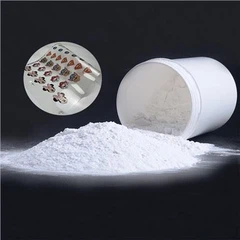




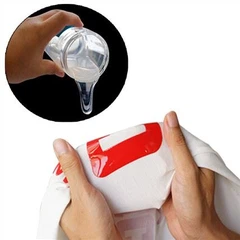


Printing paint is a uniform dispersion system made of organic or inorganic pigments and a certain proportion of glycerin, peregrine 0, emulsifier and water mixed and ground. The fineness is mostly between 0.5-2 im. If the particles are too small, the vividness of the paint will be reduced, and the excessive grinding of inorganic pigments and metal powders will cause them to lose their luster. The scrubbing fastness is poor, and the coating that has been ground to a certain fineness has a tendency to agglomerate during storage, so it is generally necessary to add protection to the coating
Colloids such as emulsifiers or cyclohexanone, etc.
Pigments used as coatings should have high stability to light, heat and climate, acid resistance, alkali resistance, oxidant resistance and commonly used chemicals, and good sublimation fastness and smoke fading fastness; coatings must have certain The specific gravity and dispersibility, if the specific gravity is too large or too small or the dispersion is poor, it is easy to cause the coating to float or sink in the color paste; it is necessary to have a high color supply and covering ability, and a small amount of coating can be used. Intense color, and the pattern printed on the dark ground color does not cause a color mixing effect with the ground color.
Coatings are usually classified according to their chemical characteristics, that is, chemical classification, which can be divided into two categories: inorganic pigments and metal powders, organic pigments and fluorescent coatings. Inorganic pigments include white Chin white powder and black carbon black, such as paint black FBRN; metal powders are mostly copper-zinc alloy powder and aluminum powder with a fineness. Organic pigments are azo dyes, metal complex dyes, phthalocyanine dyes and vat dyes that do not have water-soluble groups in their molecular structure. Generally speaking, deep red, blue, sauce and yellow paints are azo dyes, brilliant blue , Bright green paints are phthalocyanine dyes, golden yellow and blue lotus paints are vat dyes; fluorescent paints are special varieties of organic paints, and their fluorescence is mainly due to the fact that the dye molecules contain fluorescence generating groups, which are formed by the co-V system. Through, they can absorb the shorter wavelength light in the visible light, so as to reflect the longer wavelength light, they absorb the energy of the incident light, so that part of the energy is converted into light energy, so that the amount of reflected light increases, its brightness and The intensity is significantly increased, i.e. fluorescence is generated.