








one. Dye sublimation dyeing
The sublimation dyeing method is a dyeing process that relies on the sublimation dye to be heated into a gaseous state, which has the effect of diffusing and affinity for the fluff fiber to complete the coloring process. The method is to add the sublimation dye to the flocking adhesive. When the flocking is glued, the dye is also coated on the base material with the glue. After the flocking is baked, the curing and dyeing are completed at the same time. The dye sublimates from the binder into a gaseous state and escapes, transferring to the fluff.
The process flow is:
Color brush glue on the base fabric - flocking - drying - baking - dyeing
Process points:
(1) Choose dyes with good sublimation performance at high temperature. When color matching, each color dye should have similar sublimation performance.
(2) The affinity of the dye to the fluff should be greater than that of the base fabric, adhesive, etc.
(3) The colorless fluff is selected. After baking and dyeing, the color of the fiber is bright.
(4) If colored fluff is used, color-blocking flocking can be carried out according to the principle of color-blocking. If the base cloth base is blue dye and the fluff is yellow, green fluff can be finally obtained after baking.
(5) The selection of base fabric is also very important. If it is cotton, the sublimation dyes will not dye the cotton but only stain, and most of the dyes will be dyed on the fluff, and the fluff will be darker and brighter; if the base fabric is polyester fabric, the dye will Both the fluff and the base fabric are dyed, so the amount of color in the fluff is reduced and the color is relatively lighter.
(6) The equipment of most screen printing enterprises can be used to reduce capital investment.
two. Thermal transfer method
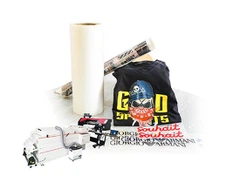
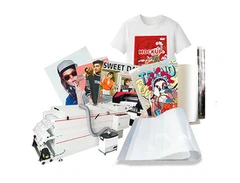
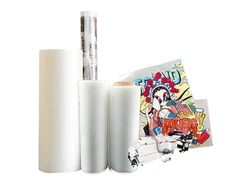
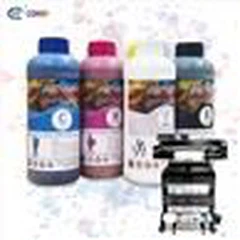
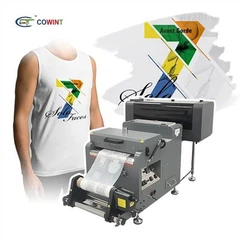
This method is to use the full area to implant colorless fluff, and then use disperse dyes for thermal transfer. The basic production method of transfer printing is to first make the applicable dye into color ink, then print it into decal paper, and then overlap the decal paper with the flocked fluff to heat and pressurize or decompress, and the graphics on the paper contain The dye will be sublimated into the gas phase and transferred to the fluff. The required transfer paper can be purchased from the market or printed by yourself.
Process flow:
Implant colorless fluff on the whole area of the base fabric - drying - printing transfer printing paper - overlapping the base fabric with fluff and the printing paper - heating and pressing - peeling off the printing paper - printing completed
Process points:
(1) Nylon or polyester fluff should be selected for this method, and polyester fluff is the best.
(2) The molecular weight of disperse dyes for transfer printing should generally not exceed 350, and 250-270 is more suitable. On the other hand, the sublimation point, transfer and diffusion properties of various dyes are close to meet the production requirements.
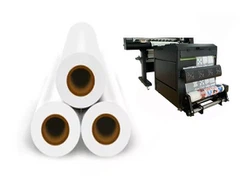
(3) Requirements for transfer printing paper: It has sufficient strength, can withstand high temperature of 220 ° C, the time should be more than 30 seconds, the surface is smooth and clean, and there is no dust. Vapor-phase dyes have a lower renewability to paper sheets. Generally, offset paper, stamp paper or special transfer printing paper can be used, and its specification is 55-80g/m2.
(4) The printing ink is mainly composed of dyes and slurry. The dyes used should be purified without dispersants and other auxiliaries. They are insoluble in water or other organic solvents. The pulp mainly acts to make the dye adhere to the paper surface. At high temperature, it should not hinder the vaporization of dyes. Commonly used pulps include ethyl cellulose, sodium alginate and polyacrylate.