











Can transfer print ink be used on foam materials? That's a question I get asked a lot as a transfer print ink supplier. And let me tell you, it's not as straightforward as you might think. In this blog post, I'm gonna break down the ins and outs of using transfer print ink on foam materials, sharing what I've learned from years in the biz.
First off, let's talk about what transfer print ink is. It's a special kind of ink designed to transfer an image from one surface to another. There are different types, like sublimation ink, heat transfer ink, and DTF (Direct to Film) ink. Each type has its own unique properties and is suitable for different materials and applications.
Foam materials, on the other hand, come in a wide variety of types, including polyurethane foam, polyethylene foam, and EVA (ethylene-vinyl acetate) foam. These foams are used in many industries, from automotive and furniture to sports and packaging. They're lightweight, flexible, and have good cushioning properties, but they also have some characteristics that can make printing on them a challenge.
One of the main issues with using transfer print ink on foam materials is adhesion. Foam surfaces are often porous and have a low surface energy, which means the ink may not stick well. This can result in poor print quality, with the ink peeling or flaking off over time. Another problem is the flexibility of the foam. Foam materials can stretch and compress, and if the ink isn't flexible enough, it can crack or break when the foam is deformed.
But don't worry, there are solutions to these problems. When it comes to adhesion, you can use a primer or a pretreatment on the foam surface before printing. This helps to increase the surface energy and create a better bond between the ink and the foam. There are also special transfer print inks available that are formulated specifically for use on porous and flexible materials like foam. These inks have better adhesion and flexibility, which can improve the print quality and durability.
Let's take a look at some of the different types of transfer print ink and how they work on foam materials.
Sublimation Ink
Sublimation ink is a popular choice for printing on fabrics and hard surfaces, but it's not typically used on foam materials. Sublimation works by turning the ink from a solid to a gas without going through a liquid phase. The gas then penetrates the surface of the material and bonds with it. However, foam materials don't have the right structure to absorb the sublimated ink effectively, so the print quality is usually poor.
Heat Transfer Ink
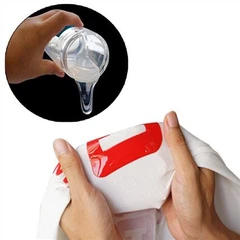
Heat transfer ink is another option for printing on foam. With heat transfer, an image is printed onto a transfer paper or film using the ink, and then the paper or film is placed on the foam and heated. The heat activates the ink, which then transfers to the foam surface. Heat transfer ink can work well on foam if the right temperature and pressure are used, and if the foam is pretreated to improve adhesion.
DTF (Direct to Film) Ink
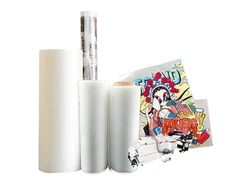
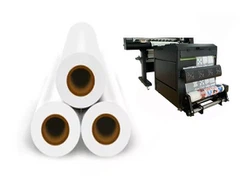
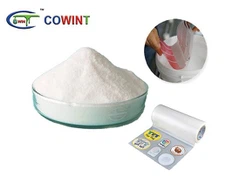
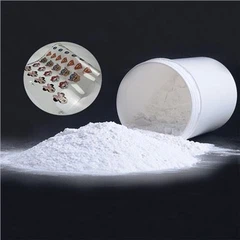
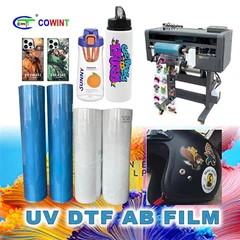
DTF ink is a relatively new technology that's becoming increasingly popular for printing on a variety of materials, including foam. With DTF, the ink is printed directly onto a special Film For Thermal Transfer, which is then covered with a powder adhesive. The film is then placed on the foam and heated, and the ink and adhesive transfer to the foam surface. DTF ink offers good adhesion and flexibility, making it a great choice for printing on foam materials.
Another option for printing on foam is using 3D Transfer Sheet. These sheets are designed to create a three-dimensional effect on the surface of the foam, adding a unique and eye-catching look to your prints. The transfer process is similar to heat transfer, but the sheet has a special texture that creates the 3D effect.
And if you're looking for a high-quality film for DTF printing, check out our INSTANT PEEL SINGLE MATTE DTF FILM. It's designed for easy peeling and provides a smooth, matte finish on your prints.
So, can transfer print ink be used on foam materials? The answer is yes, but it depends on the type of ink, the type of foam, and the printing process. By choosing the right ink and pretreatment, and by following the proper printing techniques, you can achieve high-quality, durable prints on foam materials.


If you're interested in using transfer print ink on foam materials for your business, I'd love to help. As a transfer print ink supplier, I have the knowledge and experience to recommend the best products and solutions for your specific needs. Whether you're looking to print logos, designs, or patterns on foam for automotive interiors, furniture upholstery, or sports equipment, I can provide you with the right ink and support to get the job done right.
Don't hesitate to reach out to me to discuss your project and get a quote. Let's work together to create amazing prints on foam materials!
References
- Smith, J. (2022). Printing on Flexible Materials: Challenges and Solutions. Journal of Printing Technology, 15(2), 45-52.
- Johnson, A. (2021). The Future of Transfer Print Ink Technology. International Journal of Printing Science, 8(3), 78-85.
- Brown, C. (2020). Advances in DTF Printing for Diverse Materials. Printing Industry Review, 22(4), 33-40.