











What is the print resolution achievable with transfer print ink?
As a supplier of Transfer Print Ink, I am often asked about the achievable print resolution when using our products. Print resolution is a critical factor in determining the quality and clarity of printed images, especially in the realm of transfer printing where the final output can be used on a variety of substrates, from textiles to hard surfaces.
Understanding Print Resolution
Print resolution is typically measured in dots per inch (DPI). A higher DPI means more dots are printed per inch, resulting in a sharper and more detailed image. In the context of transfer print ink, the achievable resolution depends on several factors.
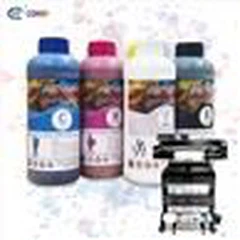
The first factor is the quality of the ink itself. Our transfer print inks are formulated to have excellent flow and adhesion properties. High - quality inks can hold their shape better when printed, allowing for finer dots and thus higher resolution. The pigments used in our inks are carefully selected for their color intensity and stability. This ensures that even at high resolutions, the colors remain vibrant and true - to - life.
The printing equipment also plays a crucial role. Modern digital printers are capable of very high resolutions, often up to 1440 DPI or even higher. However, the actual resolution achieved with transfer print ink may be limited by the printer's capabilities in terms of ink droplet size and placement accuracy. For example, a printer with a smaller ink droplet size can create more precise dots, leading to a higher resolution print.


The substrate onto which the transfer is made is another important consideration. Different materials have different surface characteristics. Smooth surfaces like some plastics and high - quality textiles can support higher resolutions as they allow the ink to spread evenly and form well - defined dots. Rough or porous surfaces, on the other hand, may absorb the ink unevenly, causing the dots to blur and reducing the effective resolution.
Achievable Resolutions in Different Transfer Printing Methods
Heat Transfer
Heat Transfer is a popular method that involves applying heat and pressure to transfer an image from a transfer paper or film to a substrate. With our transfer print ink, in heat transfer applications, resolutions of up to 600 DPI are commonly achievable on smooth textile substrates. This level of resolution is sufficient for most commercial applications, such as printing logos, graphics, and text on t - shirts, hoodies, and other apparel.
When printing on hard surfaces like mugs, plates, or phone cases, the achievable resolution may be slightly lower, around 300 - 400 DPI. This is because the heat and pressure distribution during the transfer process can be more challenging to control on these non - flexible surfaces, which may cause some minor distortion of the printed image.
Transfer Film
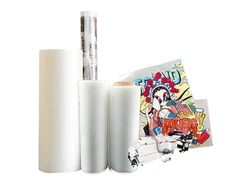
Transfer Film is another medium used in transfer printing. Our transfer print ink can be used effectively with transfer films to achieve high - quality prints. The advantage of using transfer films is that they can be designed to have a very smooth surface, which is ideal for high - resolution printing.
On transfer films, resolutions of up to 1200 DPI can be achieved in some cases. This high resolution is beneficial for applications where fine details and sharp images are required, such as printing high - end graphics for packaging or promotional materials. The ink adheres well to the transfer film, and during the transfer process, it can accurately reproduce the high - resolution image onto the final substrate.
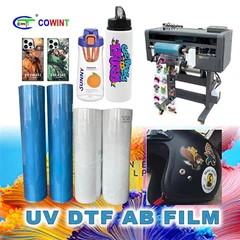
Special DTF Film
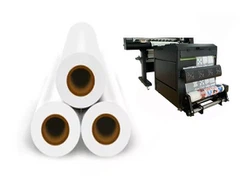
Special DTF Film is a relatively new technology in the transfer printing industry. Our transfer print ink is fully compatible with special DTF films. These films are designed to work with direct - to - film printing techniques, which can offer excellent resolution.
With special DTF films, resolutions of up to 800 - 1000 DPI can be consistently achieved. The unique properties of the DTF film allow for better control of the ink during printing and transfer, resulting in clear and detailed prints. This makes it a great option for printing on a wide range of substrates, including stretchy fabrics, which are often difficult to print on with traditional methods.
Improving Print Resolution
To achieve the highest possible print resolution with our transfer print ink, we recommend several best practices. First, always ensure that the printing equipment is properly maintained. Regular cleaning of the print heads, calibration of the printer, and use of high - quality inks are essential. Using the correct ink settings for the specific printer and substrate is also crucial.
Secondly, choose the appropriate substrate. As mentioned earlier, smooth and non - porous surfaces are generally better for high - resolution printing. If possible, pre - treat the substrate to improve its surface properties and ink receptivity.
Finally, pay attention to the transfer process. For heat transfer, use the correct temperature, pressure, and transfer time settings. This will ensure that the ink transfers cleanly and accurately from the transfer medium to the substrate, maintaining the high resolution of the printed image.
Conclusion and Call to Action
In conclusion, the achievable print resolution with our transfer print ink varies depending on the printing method, substrate, and equipment used. However, we can offer high - quality inks that are capable of achieving excellent resolutions in a wide range of applications. Whether you are printing on textiles, hard surfaces, or using special films, our transfer print ink can help you produce sharp, detailed, and vibrant images.
If you are looking for a reliable transfer print ink supplier to improve your printing quality and achieve high resolutions, we encourage you to reach out to us. Our team of experts is ready to assist you with any questions you may have about our products and to discuss your specific printing needs. We can provide samples and technical support to help you make the best choice for your business.
References
- "Principles of Transfer Printing", Textile Printing Handbook, 2018.
- "Advances in Digital Transfer Printing Technologies", Journal of Printing Science, 2020.
- "Ink Formulation for High - Resolution Transfer Printing", International Journal of Ink Science, 2021.