




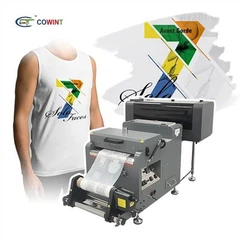




The process of printing patterns on textiles using dyes or pigments. Printing can be divided into fabric printing, woolen printing, and yarn printing, with fabric printing being the main type. Woolen stripe printing is used to make mixed color tweed; Yarn printing is used to weave colorful patterned fabrics with special styles. Fabric printing has a long history. China had already applied hollow printing during the Warring States period (see Chinese dyeing and finishing history). India already had woodblock prints in the 4th century BC. Continuous concave drum printing began in the 18th century (see drum printing). Screen printing is developed from hollow pattern printing and is suitable for small batch and multi variety printing of easily deformed fabrics. In the 1960s, metal seamless circular screen printing began to be applied, providing conditions for continuous production, with higher efficiency than flat screen printing. In the late 1960s, transfer printing methods emerged, which utilized the sublimation properties of dispersed dyes to transfer the dye on transfer paper to synthetic fiber fabrics such as polyester through heating, resulting in fine patterns. In the 1970s, a spray printing method controlled by electronic computer programs was also developed, which intermittently sprays various colors of dye from many combinations of spray ports to form colored patterns, mainly used for carpet printing.
Craftsmanship: Printed fabrics are artistic products, and corresponding printing techniques are selected based on the designed patterns. There are three commonly used types: direct printing, anti dye printing, and discharge printing. Direct printing is the process of directly printing dyes or pigments on white or light colored fabrics, followed by post-treatment such as steaming to obtain patterns. The process is short and widely used. Anti dyeing printing is a substance that is first printed on fabric to prevent dyes from dyeing or developing colors, and then dyed or developed to obtain patterns on the dyed fabric. Discharge printing is a printing process that involves removing dye substances from dyed fabrics to obtain patterns on them.
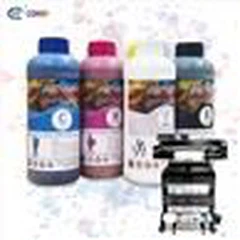
Dyes and pastes: Textiles must be pre treated before printing to have good wetting properties. The dyes used in printing are basically the same as those used in dyeing, and some smaller patterns can be coated with paint (pigment). In addition, there are also fast dyes such as fast dyes, fast amines, and fast sulfones specifically designed for printing. Different types of dyes can be used to print various patterns on the same fabric. When printing, dye or pigment is mixed into a paste. After printing and drying, it is usually necessary to steam, develop or fix the color, and then perform soap washing and water washing to fully remove the paste, chemical agents and floating colors in the color paste.
Printing ink is composed of dyes (or pigments), hygroscopic agents, cosolvents, and the original paste. The function of printing paste is to give the color paste a certain viscosity and fluidity. It is made from hydrophilic polymer paste, commonly used pastes include starch, starch degradation products (white and yellow dextrins), starch ether derivatives, sodium alginate (or ammonium), hydroxyethyl soapberry gum, dragon gum, cellulose ether, synthetic polymer electrolytes, etc. Emulsified paste made from water, kerosene, and emulsifiers, sometimes also used as a printing paste. The printing paste should have good stability against the chemical agents in the color paste, not interact with the dye, have a certain adhesion to the fibers, and be easy to wash off from the fabric. The viscosity of printing ink is determined by the properties of the original paste. If the viscosity of the ink drops too much during printing, it will be difficult to print fine lines, and if the viscosity is too high, the ink will not easily pass through the fine pores of the sieve.
Steaming and its equipment: Steaming is also known as steaming. The fabric printed with color paste is dried and steamed. Steam condenses on the fabric, causing the fabric temperature to rise, fibers and paste to swell, dyes to dissolve, and some dyes to undergo chemical reactions during the steaming process. Due to the presence of paste, the dyeing process of printing dyes is more complex, and the steaming time is longer than that of pad dyeing.
There are three types of steaming equipment: ① Steam steaming box: suspend the fabric on a bracket and push it into the box for steaming; ② Continuous steaming machine: suspend the fabric in a circular shape on a roller, slowly advance, and steam continuously; ③ Various rapid steamers. Steam boxes and hanging continuous steamers are suitable for silk fabrics, knitted fabrics, and synthetic fiber fabrics. Steaming boxes are used for steaming under sealed conditions, but cannot produce continuously. The steaming conditions vary with the properties of the dye and fiber. When steaming printed fabrics with vat dyes, the air in the steaming chamber should be expelled. Polyester printed fabrics with dispersed dyes can be steamed at around 130 ℃ in a closed steam oven, or steamed with superheated steam at around 175 ℃ under normal pressure, or baked and fixed at around 200 ℃.
Cowint is the largest DTF Film Factory in China
