











Can Hot Fix Tape be used on synthetic materials?
As a supplier of Hot Fix Tape, I often receive inquiries from customers about the compatibility of our product with synthetic materials. This is a crucial question, as the effectiveness of Hot Fix Tape largely depends on its ability to adhere properly to different types of fabrics. In this blog post, I will delve into the topic of whether Hot Fix Tape can be used on synthetic materials, exploring the science behind it, practical applications, and some tips for achieving the best results.


Understanding Synthetic Materials
Synthetic materials are man - made fibers that are created through chemical processes. Some of the most common synthetic materials include polyester, nylon, acrylic, and spandex. These materials have become increasingly popular in the textile industry due to their durability, stretchability, and resistance to wrinkles and shrinking. However, their chemical composition and surface properties can vary significantly, which affects how well they interact with Hot Fix Tape.
The Science of Hot Fix Tape
Hot Fix Tape, also known as heat - activated tape, is designed to bond two materials together when heat is applied. It typically consists of a backing material and an adhesive layer. The adhesive layer contains thermoplastic polymers that soften and flow when heated, allowing the tape to adhere to the surface of the materials. When the tape cools down, the polymers solidify, creating a strong bond.
The key to successful bonding with Hot Fix Tape lies in the interaction between the adhesive and the surface of the material. For synthetic materials, the surface energy, chemical composition, and melting point are important factors. If the surface energy of the synthetic material is too low, the adhesive may not wet the surface properly, resulting in poor adhesion. Additionally, if the melting point of the synthetic material is too close to the activation temperature of the tape, the material may deform or melt during the heat - bonding process.
Compatibility with Different Synthetic Materials
Polyester
Polyester is one of the most widely used synthetic materials. It has a relatively high melting point (around 250 - 260°C) and a smooth surface. Most Hot Fix Tapes can bond well with polyester because the adhesive can wet the surface and form a strong bond. However, it is important to choose a tape with an appropriate activation temperature. If the temperature is too high, the polyester may yellow or become brittle.
Nylon
Nylon has a lower melting point (around 215 - 260°C depending on the type) compared to polyester. It also has a more porous surface, which can allow the adhesive to penetrate and create a stronger bond. Hot Fix Tape can generally be used on nylon, but care must be taken to control the heat and pressure during the bonding process to avoid melting the nylon.
Acrylic
Acrylic fibers have a melting point of around 160 - 170°C. When using Hot Fix Tape on acrylic materials, it is crucial to select a tape with a lower activation temperature. Otherwise, the acrylic may melt or distort, leading to a poor - quality bond.
Spandex
Spandex is a highly elastic synthetic material. It has a relatively low melting point and is sensitive to heat. Using Hot Fix Tape on spandex can be challenging because the heat may cause the spandex to lose its elasticity. Specialized tapes with lower activation temperatures and gentle bonding processes are often required for spandex.
Practical Applications
Hot Fix Tape has a wide range of applications on synthetic materials. In the fashion industry, it can be used to attach decorative elements such as patches, sequins, and rhinestones to synthetic clothing. For example, a designer may use Hot Fix Tape to attach a beautiful patch to a polyester jacket, creating a unique and stylish look.
In the sports equipment industry, Hot Fix Tape can be used to repair synthetic fabrics on items like sports bags, tents, and athletic wear. If a tear occurs in a nylon sports bag, Hot Fix Tape can be used to quickly and easily mend the damage.
Tips for Using Hot Fix Tape on Synthetic Materials
- Test First: Before applying the Hot Fix Tape to a large area of the synthetic material, it is advisable to conduct a small test on a hidden or scrap piece of the same material. This will help you determine the appropriate temperature, pressure, and bonding time.
- Clean the Surface: Make sure the surface of the synthetic material is clean and free of dirt, oil, and other contaminants. These substances can interfere with the adhesion of the tape.
- Use the Right Equipment: Use a heat press or an iron with a temperature control function. Set the temperature according to the instructions provided by the Hot Fix Tape manufacturer.
- Apply Pressure Evenly: When applying heat, make sure to apply pressure evenly across the tape. This will ensure a uniform bond.
Our Hot Fix Tape Offerings
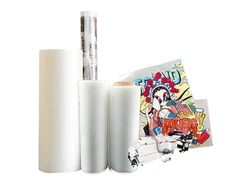
At our company, we offer a variety of Hot Fix Tapes that are suitable for different synthetic materials. Our Hot Fix Tape is carefully formulated to provide strong and durable bonds. We also offer other related products such as 60cm*100m PET Materials DTF Transfer Printing Film and Transfer Print Sheet, which can be used in conjunction with the Hot Fix Tape for various printing and bonding applications.
Contact Us for Procurement
If you are interested in our Hot Fix Tape or other products, we invite you to contact us for procurement discussions. We have a team of experts who can provide you with detailed information, technical support, and samples. Whether you are a small - scale crafter or a large - scale manufacturer, we can meet your needs and help you achieve the best results with our products.
References
- Textile Science and Technology: Fibers, Yarns, Fabrics, and Nonwovens, Volume 1, Third Edition by Horrocks, A. R., & Anand, S. C.
- Handbook of Adhesives and Surface Preparation: Technology, Applications and Manufacturing by Alagirusamy, R.