





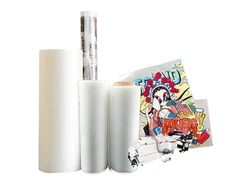
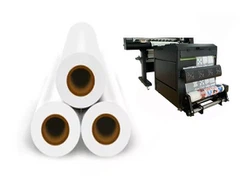








As a transfer sheet supplier, I understand the importance of anti-static properties in transfer sheets. Static electricity can cause a variety of problems during the transfer process, such as attracting dust and debris, causing the transfer sheet to stick to unwanted surfaces, and even damaging sensitive electronic components. In this blog post, I will share some effective ways to make a transfer sheet more anti-static.
Understanding the Causes of Static Electricity in Transfer Sheets
Before we dive into the solutions, it's essential to understand how static electricity is generated in transfer sheets. Static electricity is typically created when two materials come into contact and then separate. During this process, electrons can be transferred from one material to the other, leaving one material positively charged and the other negatively charged.
In the case of transfer sheets, friction is the primary culprit. When the transfer sheet is rolled, unrolled, or comes into contact with other surfaces during handling, printing, or transfer, friction occurs, leading to the build-up of static charges. Environmental factors such as low humidity can also exacerbate the problem, as dry air does not conduct electricity well, allowing static charges to accumulate more easily.
Selecting Anti-Static Materials
One of the most fundamental steps in making a transfer sheet more anti-static is to choose the right materials. Some polymers and coatings inherently have better anti-static properties than others. For example, polycarbonate and polyethylene terephthalate (PET) can be treated to enhance their anti-static characteristics.


When sourcing raw materials for transfer sheets, look for suppliers that offer anti-static versions of these polymers. These materials are often infused with additives or conductive agents that help to dissipate static charges. Conductive polymers, such as polyaniline and polypyrrole, can also be used as coatings on transfer sheets. These polymers have the ability to conduct electricity, which helps to prevent the build-up of static charges on the surface of the transfer sheet.
Applying Anti-Static Coatings
Another effective method is to apply anti-static coatings to the transfer sheet. Anti-static coatings work by creating a thin layer on the surface of the transfer sheet that can conduct electricity. There are two main types of anti-static coatings: permanent and temporary.
Permanent anti-static coatings are typically made from conductive polymers or metal oxides. These coatings are chemically bonded to the surface of the transfer sheet, providing long-lasting anti-static protection. They are suitable for transfer sheets that will be used in environments with high static electricity generation or for applications where long-term anti-static performance is required.
Temporary anti-static coatings, on the other hand, are usually made from surfactants. These coatings work by attracting moisture from the air, which helps to conduct static charges away from the surface of the transfer sheet. Temporary anti-static coatings are less expensive and easier to apply than permanent coatings, but they may need to be reapplied periodically, especially in dry environments.
Controlling the Environment
The environment in which the transfer sheets are stored, printed, and transferred can have a significant impact on static electricity generation. Controlling the humidity level is one of the most effective ways to reduce static electricity. A relative humidity level of 40% - 60% is generally recommended for minimizing static build-up.
You can use humidifiers in the storage and production areas to maintain the appropriate humidity level. Additionally, grounding equipment can be used to prevent static charges from accumulating on machinery and work surfaces. All equipment, including printers, cutters, and transfer presses, should be properly grounded to ensure that any static charges are safely dissipated.
Using Anti-Static Packaging
The packaging of transfer sheets also plays a crucial role in preventing static electricity. Anti-static packaging materials, such as anti-static bags and bubble wrap, can be used to protect the transfer sheets during storage and transportation. These materials are designed to prevent the build-up of static charges on the surface of the transfer sheets and to shield them from external static fields.
When packaging transfer sheets, make sure to use anti-static bags that are properly sealed. Avoid using regular plastic bags, as they can generate static electricity and cause damage to the transfer sheets. Additionally, label the packaging clearly to indicate that the contents are anti-static and require special handling.
Incorporating Anti-Static Features in Design
In addition to the above methods, the design of the transfer sheet itself can be optimized to reduce static electricity. For example, adding conductive paths or grids to the transfer sheet can help to distribute static charges evenly and prevent them from accumulating in one area. These conductive paths can be made from conductive inks or materials and can be integrated into the design of the transfer sheet during the printing process.
Another design consideration is the shape and size of the transfer sheet. Sharp edges and corners can create areas of high electric field concentration, which can lead to static discharge. By rounding the edges and corners of the transfer sheet, you can reduce the likelihood of static discharge and improve its anti-static performance.
Testing and Quality Control
Once you have implemented the above measures to make the transfer sheet more anti-static, it's important to test and monitor the anti-static performance of the transfer sheets. There are several methods for testing static electricity, such as surface resistance testing and static decay testing.
Surface resistance testing measures the electrical resistance of the surface of the transfer sheet. A lower surface resistance indicates better anti-static performance. Static decay testing measures the time it takes for a static charge on the surface of the transfer sheet to decay to a certain level. A shorter static decay time indicates better anti-static properties.
Regularly test the transfer sheets to ensure that they meet the required anti-static standards. Implement a quality control system to monitor the anti-static performance of the transfer sheets throughout the production process and to identify any potential issues early on.
Conclusion
Making a transfer sheet more anti-static is a multi-faceted process that involves selecting the right materials, applying anti-static coatings, controlling the environment, using anti-static packaging, incorporating anti-static features in design, and conducting thorough testing and quality control. By implementing these measures, you can significantly reduce the problems caused by static electricity and improve the performance and reliability of your transfer sheets.
At our company, we offer a wide range of transfer sheets, including 3D Transfer Sheet, INSTANT PEEL SINGLE MATTE DTF OF FILM, and HOT PEEL SINGLE MATTE DTF FILM, all of which can be customized with advanced anti-static solutions. If you are interested in learning more about our anti-static transfer sheets or have any questions about anti-static technology, please feel free to contact us for a detailed discussion and potential purchase negotiation.
References
- "Handbook of Static Electricity" by Arthur D. Moore
- "Polymer Science and Technology" by Charles E. Carraher Jr.
- "Electrostatics in the Electronics Industry" edited by Harold F. Dietz