










Making transfer film suitable for high - speed production lines is a crucial challenge in the industry. As a transfer film supplier, I've seen firsthand the importance of this adaptation. In this blog, I'll share some insights on how to achieve this goal.
Understanding the Requirements of High - Speed Production Lines
First things first, it's essential to understand what high - speed production lines demand. These lines operate at a breakneck pace, and the transfer film needs to keep up. Fast processing times mean that the film has to adhere quickly to the substrate, resist peeling during high - speed handling, and maintain its quality throughout the production process.
One of the key factors in high - speed production is the speed of the adhesion process. The film should be able to bond firmly to the substrate within a very short time frame. This requires a careful balance of the adhesive properties of the transfer film. If the adhesive is too weak, the film will peel off easily; if it's too strong, it might cause problems during the transfer process, like wrinkling or uneven application.
Another aspect is the durability of the film. On high - speed production lines, there's a lot of movement and jostling. The transfer film should be able to withstand this without getting damaged. It needs to have good tear resistance and flexibility so that it can bend and flex as it moves through the production machinery without breaking.
Formulation and Material Selection
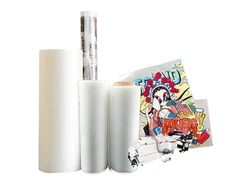
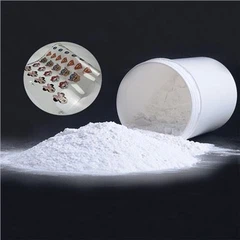
The formulation of the transfer film plays a huge role in its suitability for high - speed production. Choosing the right materials is the first step. For the base material of the transfer film, we often look at options like Heat Transfer Pet Paper. PET paper is widely used because it has good dimensional stability and thermal resistance. This means it won't shrink or warp too much when exposed to the heat and pressure during the transfer process, which is crucial for maintaining high - speed operation.


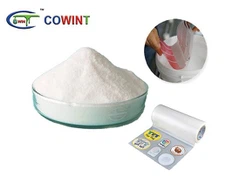
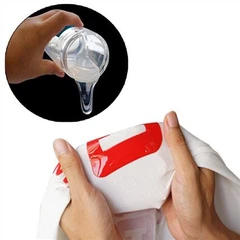
When it comes to the adhesive layer, we need to select an adhesive that can work well under high - speed conditions. Some adhesives are designed to have a fast - setting time. These adhesives start to bond quickly when heated, which is perfect for high - speed production. Additionally, the adhesive should have good shear strength to keep the film attached firmly to the substrate even during rapid movements.
We also need to consider the release layer of the transfer film. The release layer should allow for easy separation of the transfer layer from the base film. If the release is too difficult, it can slow down the production process. On the other hand, if it's too easy, the transfer layer might come off prematurely. Achieving the right balance is a matter of careful testing and material selection.
Testing and Optimization
Once we've formulated a potential transfer film for high - speed production, testing is crucial. We use in - house testing equipment to simulate the conditions of high - speed production lines. We check things like adhesion strength, transfer speed, and the quality of the transferred image or pattern.
We run multiple tests at different speeds to see how the transfer film performs. If there are any issues, such as peeling, uneven transfer, or smudging, we go back to the drawing board and make adjustments to the formulation or the manufacturing process. Sometimes, it might be as simple as tweaking the temperature or pressure settings during the transfer process. Other times, we might need to change the materials used in the film.
For example, if we notice that the film is not adhering well at higher speeds, we might increase the amount of adhesive or change the type of adhesive. If the release layer is causing problems, we can modify its composition to make it more suitable for quick and easy separation.
Compatibility with Equipment
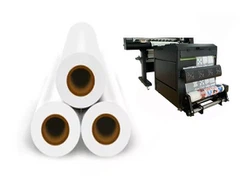
High - speed production lines use a variety of equipment, and the transfer film needs to be compatible with all of it. This includes printers, conveyors, and heat presses.
When it comes to printers, the transfer film should be able to work smoothly with the ink or toner being used. Different printers have different requirements, and the film needs to be able to accept the ink evenly and dry quickly. This is especially important for high - speed printing processes where multiple images or patterns are being printed in a short period.
Conveyor systems on high - speed production lines move the substrate and the transfer film at a rapid pace. The film should be able to move along these conveyors without getting stuck or damaged. It should have a smooth surface that can glide easily and be resistant to static electricity, which can cause the film to cling to the conveyor belts or other parts of the equipment.
Heat presses are used to transfer the image from the film to the substrate. The transfer film needs to be able to handle the heat and pressure applied by these presses. It should transfer the image clearly and completely within the short time frame that the high - speed production line allows.
Cost - Effectiveness
In addition to meeting the technical requirements of high - speed production lines, the transfer film also needs to be cost - effective. As a supplier, we know that our customers are always looking for the best value for their money.
We achieve cost - effectiveness by optimizing our manufacturing processes. This includes reducing waste, using raw materials efficiently, and streamlining our operations. For example, we can use automated production techniques to reduce labor costs and increase productivity.
We also offer different grades of transfer film to meet the diverse needs of our customers. Some customers might only need a basic transfer film for less demanding applications, while others require a high - performance film for more intricate and high - quality transfers. By providing a range of options, we can offer cost - effective solutions for different budgets.
Customer Support and Collaboration
At the end of the day, our success as a transfer film supplier depends on our customers' satisfaction. We offer comprehensive customer support to help our customers integrate our transfer film into their high - speed production lines.
We work closely with our customers to understand their specific requirements. Whether they are in the textile industry, the electronics industry, or other sectors, we tailor our transfer film solutions to their needs. We provide technical advice on things like equipment settings, transfer processes, and troubleshooting.
We also encourage feedback from our customers. If they encounter any problems or have suggestions for improvement, we take them seriously and use this information to continuously improve our products.
Specialized Transfer Films for Different Applications
In some industries, specialized transfer films are needed. For example, in the textile industry, Hot Fix Tape is commonly used. This type of transfer film allows for the quick and easy application of decorative elements like sequins and rhinestones on fabrics. For high - speed textile production lines, the hot fix tape needs to be able to adhere to the fabric rapidly and hold the decorative elements firmly in place.
In the electronics industry, Heat Transfer Materials are used for printing circuit patterns on PCBs. These transfer films need to have high precision and excellent electrical properties. They should be able to transfer the circuit patterns accurately at high speeds without causing any short - circuits or other electrical issues.
Looking Forward
The demand for transfer films suitable for high - speed production lines is only going to increase as industries strive for greater efficiency. As a transfer film supplier, we are constantly researching and developing new products to meet these evolving needs.
We're exploring new materials and technologies that can further improve the performance of our transfer films. For example, nanotechnology might offer new ways to enhance the adhesive properties and durability of the films.
Contact Us
If you're in the market for transfer films that are perfect for high - speed production lines, we're here to help. Our team of experts can provide you with more detailed information about our products and how they can benefit your production processes. Reach out to us for a consultation, and let's start a conversation about how we can meet your transfer film needs.
References
- "Industrial Transfer Printing Technologies" - Smith, J., 2020
- "Advanced Materials for High - Speed Manufacturing" - Johnson, R., 2021
- "Optimizing Transfer Film Performance" - Brown, A., 2019