











Yo, what's up! As a supplier of Transfer Print Ink, I often get asked about what goes into making this stuff. So, I thought I'd break it down and share the lowdown on the raw materials used in transfer print ink production.
Pigments
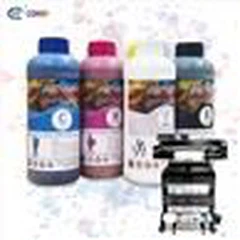
Let's start with pigments. Pigments are like the color maestros of transfer print ink. They're what give the ink its distinct and vibrant hues. There are two main types: organic and inorganic pigments.
Organic pigments are made from carbon-based compounds. They're known for their high color strength, which means you don't need a whole lot of them to get a really intense color. They also offer a wide range of colors, from bright neons to deep, rich tones. These pigments are great for creating eye-catching designs on various substrates. For example, if you're printing a cool logo on a t-shirt using Heat Transfer, organic pigments can give you that sharp and vivid look.
On the other hand, inorganic pigments are typically made from minerals like metal oxides. They're super durable and have excellent lightfastness. That means they won't fade easily when exposed to sunlight or other environmental factors. Inorganic pigments are often used in applications where long-term color retention is crucial, such as outdoor signage or industrial parts.
Binders
Next up, we have binders. Binders are the glue that holds everything together in the ink. They play a crucial role in determining the ink's adhesion properties, drying time, and overall durability.
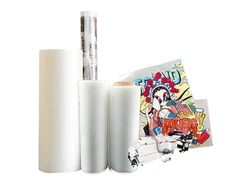
Acrylic binders are really popular in transfer print ink. They offer good adhesion to a variety of substrates, including textiles, plastics, and metals. They dry quickly and form a hard, glossy film on the surface. This makes them ideal for applications where you want a smooth and professional finish. For instance, when printing on Film For Thermal Transfer, acrylic binders ensure that the ink adheres well and doesn't smudge or flake off.
Polyurethane binders are another great option. They provide excellent flexibility and abrasion resistance. This is especially important when printing on flexible materials like fabrics or vinyl. Polyurethane binders can withstand stretching and bending without cracking, making them perfect for items like sports jerseys or automotive interiors.
Solvents
Solvents are the liquid component of the ink. Their main job is to dissolve the pigments and binders, making the ink easy to apply. They also control the ink's viscosity, or thickness.
Water-based solvents are becoming increasingly popular due to their environmental friendliness. They have low volatile organic compound (VOC) emissions, which means they're better for the air we breathe and for the planet. Water-based inks are also easy to clean up, which is a big plus in a manufacturing environment. They're commonly used in applications like textile printing and food packaging, where safety and environmental concerns are top priorities.
Solvent-based inks, on the other hand, use organic solvents like alcohols or esters. These solvents evaporate quickly, allowing the ink to dry fast. They're often used in high-speed printing processes or for applications that require a very smooth and glossy finish. However, they do have higher VOC emissions, so proper ventilation and safety measures are necessary when working with them.
Additives
Additives are like the secret sauce in transfer print ink. They're added in small amounts to enhance specific properties of the ink.


One common additive is a drying agent. As the name suggests, it speeds up the drying time of the ink. This is especially useful in high-volume printing operations where time is of the essence. By reducing the drying time, production efficiency can be significantly improved.
Another important additive is a surfactant. Surfactants help to reduce the surface tension of the ink, allowing it to spread more evenly on the substrate. This results in a smoother and more consistent print. They also help to prevent issues like ink repellency or uneven color distribution.
Anti-foaming agents are also used to prevent the formation of bubbles in the ink. Bubbles can cause defects in the print, such as uneven coverage or small holes in the design. By eliminating bubbles, the quality of the final print can be greatly improved.
Specialty Raw Materials for Different Applications
Depending on the specific application, there are some specialty raw materials that might be used in transfer print ink.
For 3D Transfer Sheet printing, special effect pigments or additives might be added to create a three-dimensional look. These can include metallic pigments, which give a shiny and reflective appearance, or pearlescent pigments, which create a iridescent effect. There might also be additives that can change the texture of the ink, making it raised or embossed.
In food packaging applications, the raw materials used in the ink need to meet strict safety standards. This means using food-grade pigments and binders that are non-toxic and won't migrate into the food. Special coatings or barriers might also be added to the ink to prevent any potential contamination.
Conclusion
So, there you have it – a breakdown of the raw materials used in transfer print ink production. Pigments give the color, binders hold everything together, solvents make it easy to apply, and additives enhance its properties. Depending on the application, specialty raw materials can be added to create unique effects or meet specific requirements.
If you're in the market for high-quality transfer print ink or have any questions about our products, don't hesitate to reach out. We're here to help you find the perfect ink solution for your needs. Whether you're a small business looking to print custom t-shirts or a large industrial manufacturer, we've got you covered. Let's start a conversation and see how we can work together to bring your printing projects to life!
References
- Smith, J. (2020). The Science of Printing Inks. Printing Press Inc.
- Johnson, A. (2019). Pigments and Their Applications in Modern Inks. Color Science Publishing.
- Brown, C. (2021). Binder Technologies for Transfer Print Inks. InkTech Journal.