














Hot melt adhesives have become a crucial component in various industries, and the aerospace sector is no exception. The aerospace industry demands materials that can withstand extreme conditions and meet stringent safety and performance standards. As a hot melt adhesive supplier, we understand the unique challenges and requirements that come with providing adhesives for aerospace applications. In this blog post, we will explore the special requirements for hot melt adhesives in aerospace use.
Extreme Temperature Resistance
One of the most significant challenges in aerospace applications is the wide range of temperatures that components may encounter. From the frigid cold of high - altitude flight to the intense heat generated during re - entry (in the case of space vehicles), hot melt adhesives must maintain their integrity.
For instance, during a typical flight, the exterior of an aircraft can experience temperatures as low as - 50°C or even lower at cruising altitudes. On the other hand, certain components near engines or other heat - generating areas can reach temperatures well above 100°C. Our hot melt adhesives are formulated to have a high glass - transition temperature (Tg) and a wide operating temperature range. This ensures that they remain stable and maintain their adhesive properties across these extreme temperature variations. They should not become brittle in cold conditions, which could lead to cracking and loss of adhesion, nor should they soften or melt in high - temperature environments.


High Strength and Durability
Aerospace structures are subject to significant mechanical stresses, including vibrations, shocks, and pressure changes. The hot melt adhesives used must be able to provide high - strength bonds that can withstand these forces over long periods. For example, in the assembly of aircraft wings or fuselage sections, the adhesive needs to hold parts together firmly to ensure the structural integrity of the entire aircraft.
Our adhesives are designed to have excellent shear, peel, and tensile strength. They are also engineered to resist fatigue, as the constant vibrations and stress cycles in flight can cause conventional adhesives to weaken over time. By using advanced polymer chemistries, we can create hot melt adhesives that form strong, durable bonds that last for the lifespan of the aerospace component.
Lightweight
Weight is a critical factor in aerospace design. Every extra kilogram of weight can increase fuel consumption and reduce the aircraft's range and payload capacity. Therefore, hot melt adhesives used in aerospace must be lightweight. Our adhesives are formulated with low - density polymers and additives to minimize their weight without sacrificing performance. This allows aerospace manufacturers to use adhesives for bonding components without adding excessive weight to the overall structure.
Chemical Resistance
Aerospace components are exposed to a variety of chemicals, including fuels, hydraulic fluids, and de - icing agents. Hot melt adhesives must be resistant to these chemicals to prevent degradation of the bond. For example, if an adhesive is not resistant to fuel, it could dissolve or swell when in contact with aviation fuel, leading to a loss of adhesion and potential failure of the bonded joint.
Our hot melt adhesives are tested extensively for chemical resistance. We use polymers and additives that are inherently resistant to common aerospace chemicals. This ensures that the adhesives maintain their performance even when exposed to harsh chemical environments over long periods.
Flame Retardancy
Safety is of utmost importance in the aerospace industry. Hot melt adhesives used in aircraft interiors and other critical components must be flame - retardant. In the event of a fire, these adhesives should not contribute to the spread of flames or produce toxic smoke. Our adhesives are formulated with flame - retardant additives that meet strict aerospace fire safety standards. These additives work by suppressing the ignition and combustion of the adhesive, providing valuable time for passengers and crew to evacuate in case of an emergency.
Compatibility with Aerospace Materials
Aerospace components are made from a variety of materials, including metals (such as aluminum and titanium), composites (such as carbon fiber - reinforced polymers), and plastics. Hot melt adhesives must be compatible with these different materials to form strong bonds. Our R & D team conducts extensive compatibility testing to ensure that our adhesives can bond effectively to various aerospace materials. We also offer customized adhesive solutions based on the specific materials and bonding requirements of our customers.
Low Outgassing
In space applications, outgassing is a major concern. Outgassing occurs when volatile components in a material vaporize in the vacuum of space. These vapors can condense on sensitive optical or electronic components, causing damage or reducing their performance. Our hot melt adhesives are formulated to have low outgassing properties. We use low - volatility polymers and carefully select additives to minimize the release of volatile compounds. This makes our adhesives suitable for use in space vehicles and satellites.
Regulatory Compliance
The aerospace industry is highly regulated, and hot melt adhesives must comply with various international standards and regulations. These include standards related to safety, performance, and environmental impact. As a responsible supplier, we ensure that our adhesives meet all relevant aerospace regulations, such as those set by the Federal Aviation Administration (FAA) in the United States and the European Union Aviation Safety Agency (EASA). We also conduct regular quality control checks to ensure the consistency and compliance of our products.
Our Product Offerings
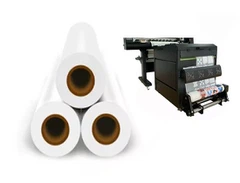
In addition to our high - performance hot melt adhesives for aerospace applications, we also offer a range of related products. For example, we provide Transfer Printing Material that can be used in aerospace interior decoration. Our DTF Clear Pet Film offers excellent clarity and durability, suitable for various aerospace display and protection applications. And our Overlay Decoration Film can be used to enhance the aesthetics and functionality of aerospace components.
Conclusion
The aerospace industry has unique and demanding requirements for hot melt adhesives. From extreme temperature resistance and high strength to lightweight design and chemical resistance, our hot melt adhesives are engineered to meet these challenges. As a reliable supplier, we are committed to providing high - quality products that comply with all relevant aerospace regulations.
If you are in the aerospace industry and are looking for a hot melt adhesive solution that meets your specific needs, we encourage you to contact us for a detailed discussion. Our team of experts is ready to work with you to develop the perfect adhesive for your application.
References
- Aircraft Design: A Conceptual Approach by Daniel P. Raymer
- Handbook of Adhesives and Surface Preparation: Science, Technology, and Applications by Khalid A. Migdal
- Aerospace Materials and Processes Handbook by SAE International