









Hey there! As a supplier of transfer adhesive, I often get asked about the impact resistance of our products. It's a crucial factor, especially when it comes to various applications where the adhesive might face unexpected knocks or jolts. So, let's dive into what impact resistance really means for transfer adhesive and how it affects our customers.
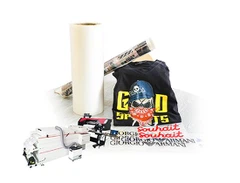
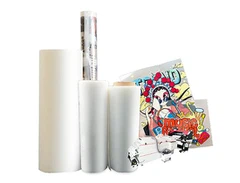
First off, what is impact resistance? In simple terms, it's the ability of the transfer adhesive to withstand sudden forces or impacts without losing its adhesion or getting damaged. When you're using transfer adhesive for things like OEM 3D Transfer, Transfer Print Sheet, or 3D Transfer Sheet, you want it to stay put even when there's some rough handling.
Let's talk about the science behind it. The impact resistance of transfer adhesive depends on several factors. One of the main ones is the type of polymer used in the adhesive formulation. Different polymers have different properties, and some are more resilient to impacts than others. For example, elastomeric polymers tend to have better shock - absorbing capabilities. They can stretch and deform a bit when an impact occurs and then bounce back to their original shape, which helps to maintain the bond between the transferred material and the substrate.
Another important factor is the thickness of the adhesive layer. A thicker layer of transfer adhesive can sometimes provide better impact resistance. It acts as a cushion, absorbing more of the energy from the impact. However, it's a delicate balance because if the layer is too thick, it can also cause other issues like longer drying times or a messier application.
The surface texture of the substrate also plays a role. A rough surface can provide more points of contact for the adhesive, which can enhance its grip and make it more resistant to impacts. On the other hand, a smooth surface might require a different type of adhesive with stronger bonding properties to achieve the same level of impact resistance.
Now, let's look at some real - world applications. In the automotive industry, transfer adhesive is used for attaching various components like emblems, trim pieces, and interior decorations. These parts are constantly exposed to vibrations, bumps, and even minor collisions. So, the impact resistance of the transfer adhesive is crucial to ensure that these components stay in place for the long term. If the adhesive fails under impact, it can lead to parts falling off, which is not only a safety hazard but also a major inconvenience for the vehicle owner.


In the electronics industry, transfer adhesive is used to attach small components on circuit boards. With the increasing miniaturization of electronic devices, these components are often subjected to rough handling during the manufacturing process and in daily use. A transfer adhesive with good impact resistance can prevent components from coming loose, which can lead to malfunctions or even complete device failure.
In the packaging industry, transfer adhesive is used to seal boxes, attach labels, and create tamper - evident seals. Packages are often dropped or bumped during shipping and handling. An adhesive with high impact resistance ensures that the seals remain intact, protecting the contents inside.
So, how do we test the impact resistance of our transfer adhesive? We use a variety of methods. One common test is the drop test. We apply the transfer adhesive to a sample substrate with a transferred material and then drop it from a certain height onto a hard surface. We then examine the bond to see if there are any signs of failure, such as delamination or detachment.
Another test is the pendulum impact test. A pendulum is swung against the sample, delivering a sudden impact. The force of the impact can be adjusted, and we measure the amount of energy required to break the bond. This gives us a quantitative measure of the adhesive's impact resistance.
As a supplier, we're constantly working on improving the impact resistance of our transfer adhesive. We invest in research and development to find new polymer formulations and manufacturing processes that can enhance this property. We also work closely with our customers to understand their specific needs and develop customized solutions.
If you're in the market for transfer adhesive and are concerned about impact resistance, we'd love to have a chat with you. Whether you're working on OEM 3D Transfer, Transfer Print Sheet, or 3D Transfer Sheet projects, we can provide you with the right product and technical support. Just reach out to us for a consultation, and let's see how we can meet your requirements.
References:
- Polymer Science and Technology textbooks
- Industry reports on adhesive applications in automotive, electronics, and packaging industries
- In - house research and development data on transfer adhesive impact resistance testing